Mold Removal in Richardson, TX
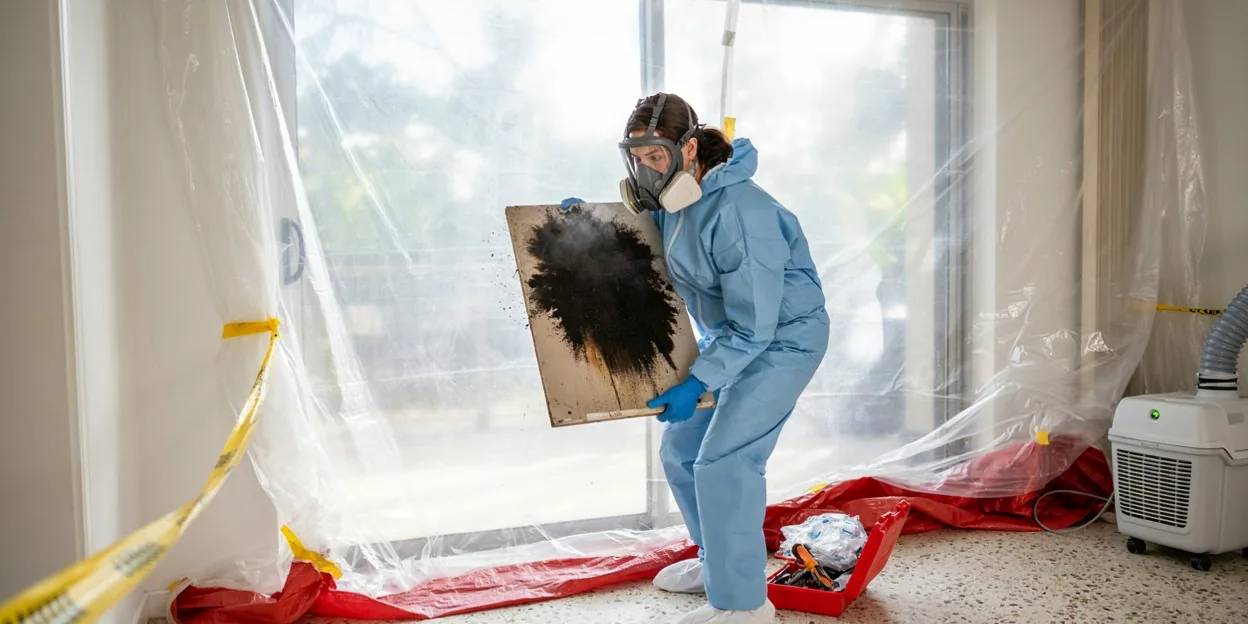
Richardson is Plano's southern neighbor, split between Dallas and Collin counties, and it is the oldest large housing stock in this market. Richardson Heights, Canyon Creek, and the neighborhoods along Arapaho and Belt Line went up in the 1950s through the 1970s as the Telecom Corridor took shape, and most are single-story brick ranches on slabs with copper supply lines and cast iron drains cast into the concrete. Those drains are now fifty to seventy years old, and the clay under them has moved every summer since.
A cracked cast iron drain under a Richardson slab is the classic slow leak: no spray, no sound, just a hall closet that smells like a creek and a baseboard that goes soft. The second Richardson story is wind. On October 20, 2019, an EF3 tornado tracked nearly sixteen miles from northwest Dallas into Richardson before lifting near North Jupiter Road, and roofs opened that night let rain onto attic insulation that stayed wet into the following spring.
Call from Richardson and you reach an independent local mold provider, not a call center that books for a chain. That provider meters the house and writes the scope; we set up the call and step aside.
Richardson mold removal under a 1962 slab and over a 2019 roof
A soft baseboard and a smell in the hall closet of a Richardson Heights ranch is mold removal, with a plumber tracing the cast iron drain first. A black line on the hall bath grout that comes back every month is bathroom mold removal, usually a flange or a spout leaking into the slab. Insulation and decking that stayed wet after the 2019 storm is attic mold remediation.
City Hall, the university, and a permit for the rebuild
Rebuilding plumbing or electrical in Richardson runs through the City of Richardson whichever county the house sits in. The city grew up around The University of Texas at Dallas, founded in 1961, whose campus sits mostly on the Collin County side of the city, and the rental houses around it see more than their share of long-unnoticed leaks.
Call (972) 787-0657 and tell us what you see. We put you through to a local mold provider serving Richardson.
Services Available in Richardson
Mold Removal
Growth on drywall after a slab leak, a water heater, or a washer box let go: room sealed, wet board cut to the meter line, framing HEPA-cleaned and dried.
Black Mold Removal
A dark patch handled by how far the water traveled, not its color: containment up, porous material out, hard surfaces cleaned, the leak fixed before closing.
Whole-Home Mold Remediation
A slab leak that ran for months or a line that split in a freeze and soaked several rooms, mapped wall by wall and cleared in zones as one project.
HVAC Mold Cleaning
Coil, drain pan, and condensate line cleaned or replaced when the attic air handler sweats through a 100-degree Plano summer and drips into the ceiling below.
Bathroom Mold Removal
Growth behind a vanity, under a shower pan, or on a ceiling with a weak fan, removed after the supply line or the drain leak behind it is repaired.
Attic Mold Remediation
Growth on roof decking under hail-cracked shingles or around a sweating duct, cleaned and treated once the roof and the insulation are put right.
Mold Odor Removal
A musty smell in a house that looks fine, traced to the wet pad under the floor or the drywall behind a cabinet, then removed and treated.
Mold Damage Repair
Drywall, texture, baseboard, and cabinet bottoms put back after removal, once the slab reads dry and the plumber has fixed what started it.