Attic Mold Remediation in Plano, TX
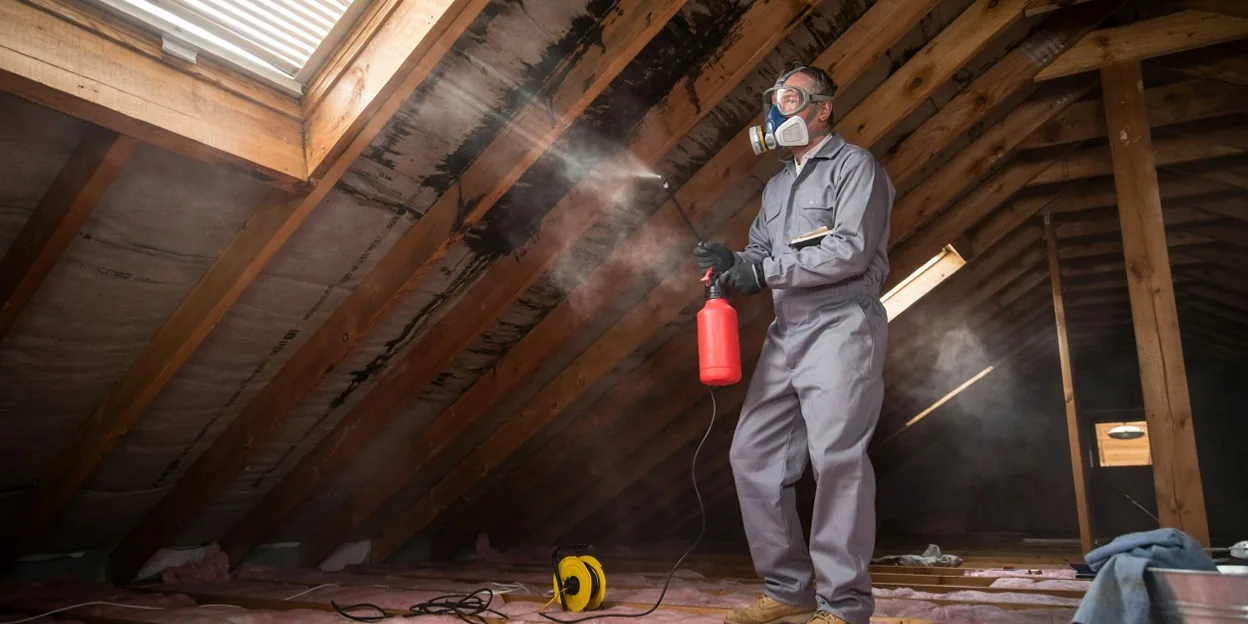
The roofer who came to quote the hail claim sent you a photo from inside the attic: a black fan shape spreading down the underside of the decking from a nail line, and insulation below it packed flat and gray. The shingles above it cracked in a storm two springs ago and the roof has been letting in a little water every time it rains since. This site connects you by phone with an independent local provider who does attic mold remediation in Plano and across Collin County.
Decking, rafters, and insulation, read with a meter in the attic heat
The crew goes up early in the day, before the attic reaches 130 degrees, with a moisture meter and a bright light. They read the decking around every stain, the rafters beneath it, and the top plates where water runs down the slope and collects. Insulation under each wet patch is pressed and metered, because batts and blown fiberglass hold water against the ceiling drywall long after the roof dries.
They also look at what is not a roof leak. A bathroom fan that dumps into the attic, a dryer vent that came apart, a kitchen hood that ends under the ridge, and a sweating duct with torn insulation each make their own moist patch on the decking, and each gets fixed differently from a shingle.
Get the roof patched and leave the insulation alone
If shingles are missing or cracked, get a roofer to tarp or patch the spot now, before the next line of storms. Put a bucket under any ceiling stain and photograph the ceiling and, if you can safely reach it, the decking. Do not pull down the wet insulation yourself; it comes apart into the air and lands in the living room through the attic hatch.
Leave the air conditioning on and the attic hatch closed. If the stain is above a closet or a bathroom, check whether the fan in that room actually vents outside; in a lot of Plano houses from the 1970s and 1980s it stops a foot above the ceiling.
Wet insulation out, wood cleaned and treated, ceiling cut if it reads wet
Wet insulation is bagged and carried out through the hatch under a plastic chute, so the hallway below stays clean. The decking, rafters, and top plates are HEPA vacuumed, cleaned with a product suited to bare wood, and in heavier cases lightly sanded or soda-blasted, then treated. Air movers and a dehumidifier run in the attic until the wood reads dry, which in a Plano summer is quick once the roof is tight and the water stops.
Decking that has gone soft is replaced from above by the roofer. Any ceiling drywall that reads wet below the stain is cut out under containment in the room beneath it. If the moisture traces to the air handler rather than the roof, the job is HVAC mold cleaning. A stain that has climbed down a bedroom wall is mold removal. New insulation, ceiling drywall, and paint are mold damage repair.
Hail every few springs, and a roof that was patched late
Collin County sits in the heart of North Texas hail alley, and Plano roofs take stones most springs. On April 11, 2016, a supercell dropped hail of 2.5 inches two miles north of Plano and more than four inches in Wylie, with two-inch reports in Allen, Parker, and Lucas. A roof that cracked that evening and was quoted, disputed, and replaced the following winter let water onto the decking through a whole summer of afternoon storms. The attics under those roofs are where the dark fan shapes come from.
The other attic story is condensation. A Plano attic in August is a 130-degree oven with a 55-degree supply duct running through it, and any gap in the duct insulation sweats onto the insulation below. In February 2021, the reverse happened: attic supply lines froze and split when Dallas hit minus 2 degrees, and water ran down through decking, insulation, and ceilings before the thaw let anyone find the break. Attic jobs often exceed 25 contiguous square feet of growth, so the provider needs a TDLR mold remediation contractor license, and the roof work itself goes to a roofer.
Calling about a stained attic or ceiling in Plano
Have the address, which room is under the stain, and whether a roofer has been up. Say whether the roof took hail and when, whether the stain grows after rain or after the air runs, and whether anyone has pulled insulation. Call (972) 787-0657.